A plain-English guide to Sevenoaks council tax bands for 2026/27: the charge for every band A to H, what Band D is, how the bill splits between KCC, police, fire, the district and your parish, and how to check, challenge or cut your bill.
If you live in the Sevenoaks district, your council tax is one of the biggest fixed bills you pay each year, and most people never look at how it is worked out. The band your home sits in decides the amount, and that amount is then shared between five different organisations, not just the local council. This guide sets out the 2026/27 charge for every band from A to H, explains what Band D means, shows how the bill is split between Kent County Council, the police, the fire service, Sevenoaks District Council and your parish, and covers how to check your band, challenge it if it looks wrong, and bring the bill down with discounts. Every figure is linked back to the council or the official source so you can check it yourself.
The quick answer
For 2026/27, the council tax on a Band D home in Sevenoaks town is £2,563.23 a year. The exact figure depends on which parish you live in, because each town and parish council adds its own small precept on top. Across the district the Band D charge runs from about £2,452 in the cheaper parishes to £2,576 in Westerham. A Band A home pays two thirds of the Band D figure, and a Band H home pays double it. All the figures below come from the Sevenoaks District Council 2026/27 charges schedule.
What the council tax bands actually mean
Every home in England is placed in one of eight bands, A to H. The band is not based on what your house is worth today. It is based on what the property would have sold for on the open market on 1 April 1991. That valuation date has never changed since council tax began in 1993, which is why a modest flat and a large family home can sit closer together than you might expect.
The 1991 value ranges for each band in England, set by the Valuation Office Agency, are:
| Band | 1991 property value |
|---|---|
| A | Up to £40,000 |
| B | £40,001 to £52,000 |
| C | £52,001 to £68,000 |
| D | £68,001 to £88,000 |
| E | £88,001 to £120,000 |
| F | £120,001 to £160,000 |
| G | £160,001 to £320,000 |
| H | More than £320,000 |
Band D is treated as the standard or reference band. When councils, the police or the government quote a council tax figure, they almost always quote the Band D amount, and every other band is then worked out as a fixed proportion of it. A Band A home always pays 6/9ths of Band D, a Band H home pays 18/9ths (double), and so on. That ratio is set in law and is the same everywhere in England.
Sevenoaks council tax by band for 2026/27
The table below shows the full 2026/27 charge for each band, using Sevenoaks Town as the example because it covers the largest number of households. If you live in another parish, your figure will be a little higher or lower, and the parish list further down shows by how much.
| Band | Annual charge (Sevenoaks Town) |
|---|---|
| A | £1,708.82 |
| B | £1,993.62 |
| C | £2,278.43 |
| D | £2,563.23 |
| E | £3,132.84 |
| F | £3,702.44 |
| G | £4,272.05 |
| H | £5,126.46 |
Source: Sevenoaks District Council council tax charges 2026/27.
What it means for you: if you are in Band C, which is common for terraced houses and many flats in the district, you are paying just under £2,280 for the year, or around £190 a month over ten instalments. If you are in Band F, a typical figure for a larger detached home, you are paying over £3,700. The gap between bands is fixed, so moving up one band is not a small jump.
How your bill splits between five organisations
The single figure on your bill is collected by Sevenoaks District Council, but the council keeps only a small slice of it. The money is divided between five separate bodies, each of which sets its own charge. Here is the breakdown for a Band D home in 2026/27.
| Where it goes | Band D charge | Share |
|---|---|---|
| Kent County Council | £1,758.60 | about 69% |
| Kent Police and Crime Commissioner | £285.15 | about 11% |
| Sevenoaks District Council | £258.48 | about 10% |
| Kent Fire and Rescue Service | £99.81 | about 4% |
| Your town or parish council | varies | the rest |
By far the largest part, around 69 pence in every pound, goes to Kent County Council for services like adult social care, children’s services, schools support, libraries and most main roads. KCC set its 2026/27 charge at a 3.986% increase, which it described as roughly £5.62 a month more for a Band D household, keeping it below the national 5% cap.
The next slice goes to the Kent Police and Crime Commissioner. For 2026/27 the policing precept rose by the maximum £15 a year for Band D, taking it to £285.15, an increase of about 5.6%, approved by the Kent and Medway Police and Crime Panel on 5 February 2026.
Sevenoaks District Council itself takes only about 10 pence in the pound. The district raised its own share by 2.98% for 2026/27, which it put at an extra £7.47 a year, or 14 pence a week, for a Band D home, taking the district element to £258.48. The council said its budget for the year would be £22.3m, up by more than £2m on the previous year. This is the part that pays for bin collections, planning, parks, leisure and most of the services people think of as local.
Kent Fire and Rescue Service takes the smallest precepting slice, £99.81 at Band D, up £4.95 or 5.22% on the year before, per its own 2026/27 statement.
The final part is your town or parish council, which is why the total differs depending on where in the district you live.
Why your parish changes the figure
Sevenoaks district is made up of dozens of towns and parishes, and each parish council adds its own precept on top of the four charges above. That precept funds very local things: allotments, recreation grounds, street furniture, some community facilities. It is usually small compared with the county and police elements, but it explains why two identical Band D homes a few miles apart can have different bills.
Here is the Band D charge for 2026/27 across a selection of parishes, so you can see the spread:
| Parish | Band D charge |
|---|---|
| Brasted | £2,452.47 |
| Riverhead | £2,456.37 |
| Penshurst | £2,459.84 |
| Knockholt | £2,479.37 |
| Hartley | £2,489.85 |
| Kemsing | £2,507.26 |
| Swanley | £2,529.03 |
| Otford | £2,529.51 |
| Sevenoaks Town | £2,563.23 |
| Westerham | £2,576.22 |
Source: Sevenoaks District Council council tax charges 2026/27. The same schedule lists every other parish in the district.
What it means for you: the parish part is the only element you can shop on within the district, and even then the difference between the cheapest and most expensive parish at Band D is only around £160 a year. The band itself, and the county and police precepts, matter far more.
How to check or challenge your council tax band
If you think your home is in the wrong band, you can look it up and, if needed, ask for it to be reviewed. Banding is handled by the Valuation Office Agency, not by Sevenoaks District Council, so a band challenge goes to the VOA, while a billing question goes to the council.
To check your band, search your postcode on the GOV.UK council tax band tool. It shows your band and your neighbours’ bands, which is useful, because if similar homes in your street are in a lower band than yours, that is the strongest evidence you have a case.
To challenge your band, use the VOA challenge service on GOV.UK. You do not need to pay anyone to do this. Be aware the review can go either way: the VOA could agree and lower your band, leave it unchanged, or in rare cases raise it. The Valuation Office will want evidence, typically the bands and sale prices of similar nearby properties as at the 1991 valuation date.
Sevenoaks District Council points residents to the same official routes and explains the difference between a band challenge and an appeal on its council tax bands, charges and appeals page.
Discounts, exemptions and ways to pay less
A surprising number of households pay more than they need to because they never claim a discount they are entitled to. The main ones in Sevenoaks are:
- Single person discount of 25%. If you are the only adult living in the property as your main home, you get 25% off. This applies only to your main home, not a second home, per the council’s discounts page.
- People who are “disregarded”. Full time students, apprentices on low pay, some carers, and people who are severely mentally impaired are not counted when working out how many adults live in a home. If everyone in the property is disregarded, the discount can be larger than 25%.
- Disabled band reduction. If a disabled person lives in the home and it has an extra feature for their needs, such as a downstairs bathroom or space for a wheelchair, the bill can be charged at the band below your actual band. Details are on the disabled reduction page.
- Council Tax Reduction. If you are on a low income or receive certain benefits, you may be able to get a reduction in the bill itself, separate from the discounts above. See Council Tax Reduction.
- Exemptions. Some homes pay nothing at all, for example a property left empty because the resident has gone into hospital or a care home, or a home occupied only by full time students.
It is worth knowing the charges that go the other way too. In Sevenoaks, second homes are charged an extra 100% premium from April 2025, effectively doubling the bill, and long term empty homes carry a rising premium: an extra 100% once empty more than a year, 200% after five years, and 300% after ten years, per the council’s empty properties and second homes page.
What it means for you: if you live alone, claim the single person discount, it is the easiest £600 to £1,000 a year most households can save depending on band. If a student or carer lives with you, check whether they should be disregarded. And if you have a disabled resident with an adapted home, the band reduction is often missed.
Frequently asked questions
What is the Sevenoaks Band D council tax for 2026/27?
In Sevenoaks town it is £2,563.23 for the year. The figure varies slightly by parish across the district, from about £2,452 to £2,576 at Band D, because each parish adds its own precept. The figures are in the council’s 2026/27 charges schedule.
How much is council tax in Sevenoaks per band?
For Sevenoaks town in 2026/27: Band A £1,708.82, Band B £1,993.62, Band C £2,278.43, Band D £2,563.23, Band E £3,132.84, Band F £3,702.44, Band G £4,272.05, Band H £5,126.46. Other parishes differ by a small parish precept.
Where does my Sevenoaks council tax go?
About 69% goes to Kent County Council, about 11% to Kent Police, about 10% to Sevenoaks District Council, about 4% to Kent Fire and Rescue, and the remainder to your town or parish council. At Band D that is £1,758.60 to KCC, £285.15 to the police, £258.48 to the district, £99.81 to the fire service, plus the parish element.
How do I check what council tax band my house is in?
Search your postcode on the GOV.UK band checker. It shows your band and your neighbours’ bands free of charge.
How do I challenge my Sevenoaks council tax band?
Use the VOA challenge service on GOV.UK. The Valuation Office Agency, not the council, sets bands. You do not need to pay a company to do this, and a review can lower, keep or raise your band, so gather evidence from similar nearby homes first.
Can I get a discount on my Sevenoaks council tax?
Yes. If you live alone you can claim a 25% single person discount. Other discounts and exemptions exist for students, carers, disabled residents and people on low incomes, listed on the council’s discounts and reductions pages.
Sources
- Sevenoaks District Council, council tax charges 2026/27 (all bands, all parishes)
- Sevenoaks District Council, council tax bands, charges and appeals
- Sevenoaks District Council, 2026/27 budget news (district element +2.98%)
- Sevenoaks District Council, discounts and empty properties and second homes
- Kent County Council, 2026/27 budget and council tax (Band D £1,758.60, +3.986%)
- Kent Police and Crime Commissioner, setting the budget (Band D £285.15, +£15)
- Kent Fire and Rescue Service, council tax 2026/27 (Band D £99.81)
- Valuation Office Agency / GOV.UK, how council tax bands are assessed, check your band and challenge your band
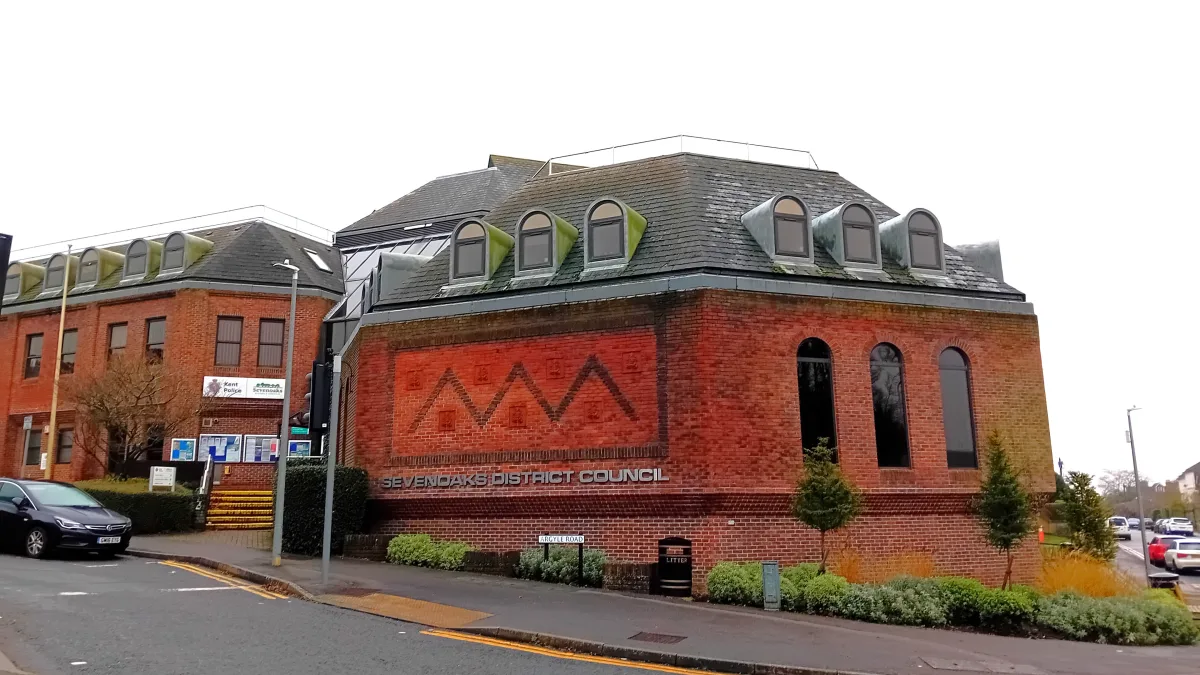
Image: “Sevenoaks District Council Offices” by Richard Kelly, CC BY 4.0, via Wikimedia Commons (https://commons.wikimedia.org/wiki/File:Sevenoaks_District_Council_Offices.jpg).
Comments
0 commentsNo comments yet. Be the first to have your say.